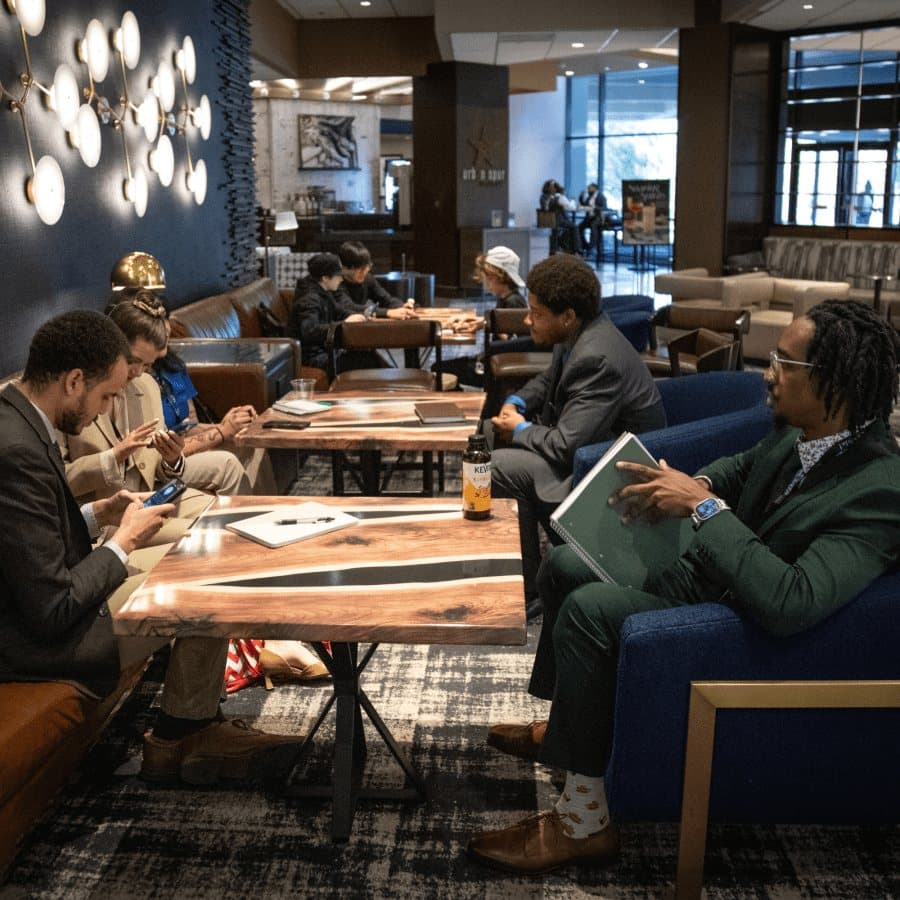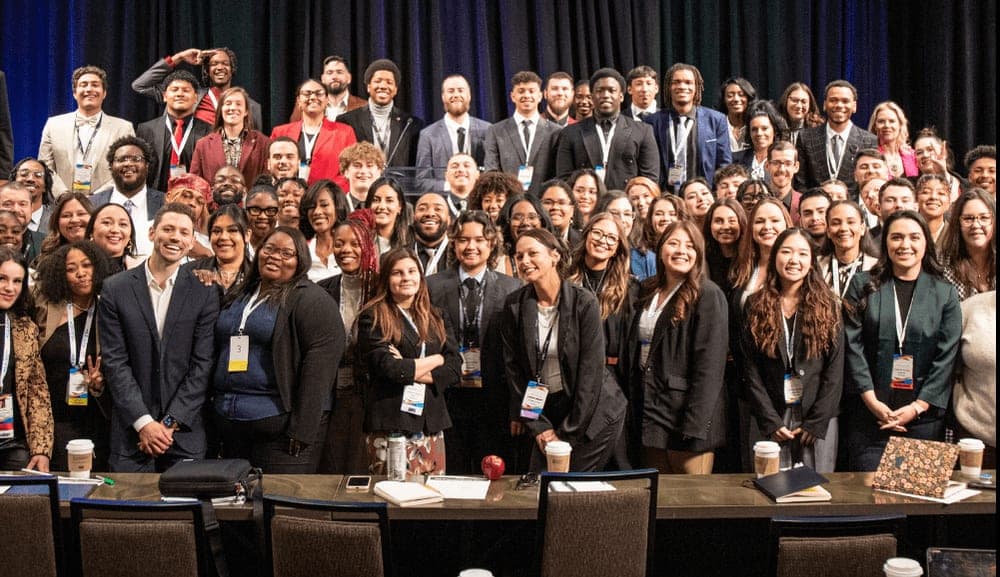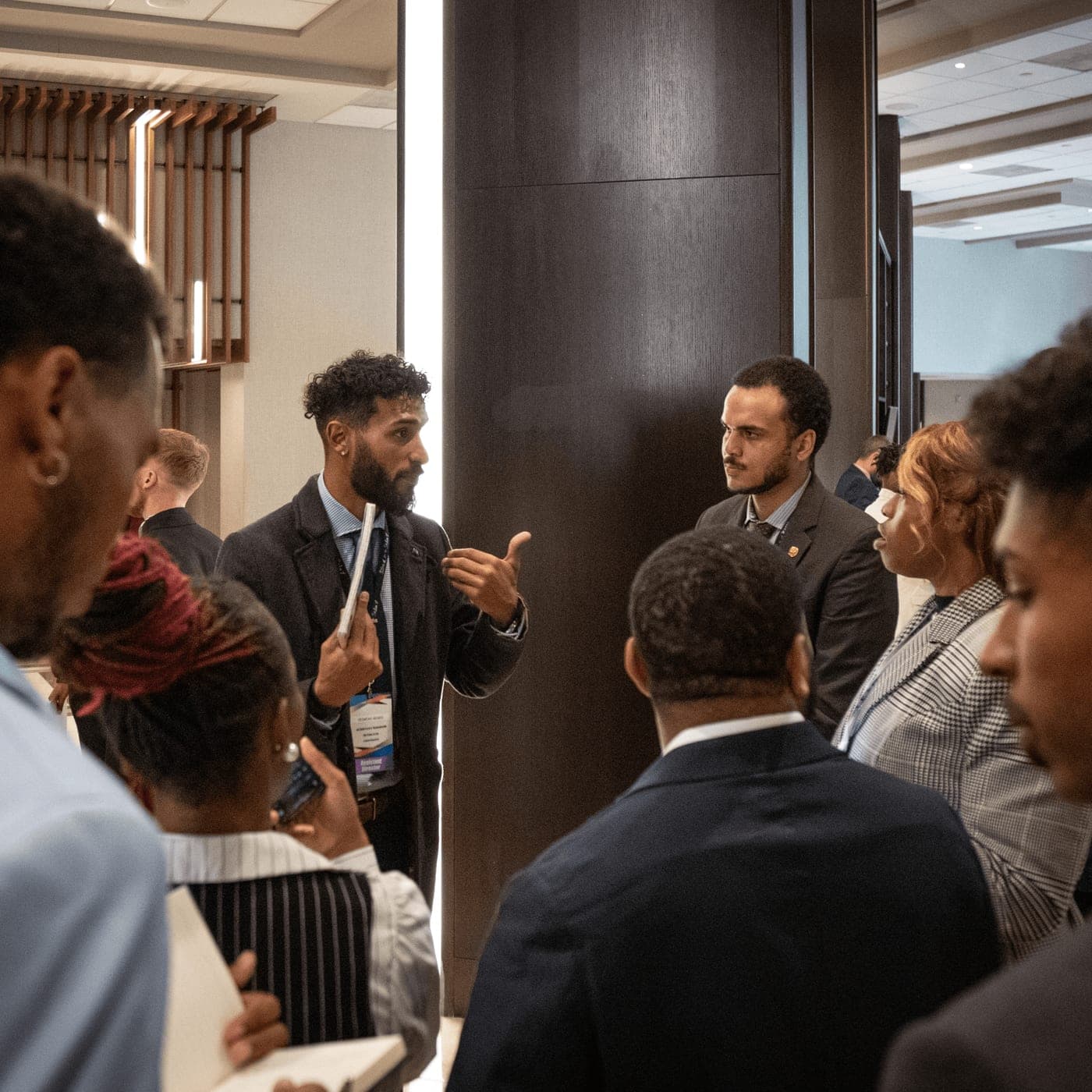
This is the longer version of the job description: what a working day looks like on a Synergize outreach campaign, who is standing next to you while it happens, and how anyone can tell at the end of a week whether it went well.
what does a community outreach associate actually do all day?
You spend most of the day in public, representing one nonprofit partner at an event or a tabling location, having short conversations with people who did not wake up planning to talk to you. The rest is setup, breakdown, a team meeting at the start, and writing down what happened.
The morning starts at the Rancho Cordova office with a meeting the team has been deliberately shortening. It covers which partner you are representing, where you are going, what is different about today, and one thing worth practicing. Then everyone leaves. The office is a base, not the place the work happens.
At the location, the day is repetitive in a way that is either satisfying or maddening depending on the person. You set up. You talk to whoever comes past. Most conversations are short. A few are long, because somebody has a personal reason to care about drug prevention or about bullying, and those are the ones you remember on the drive home. When you cannot answer a question, you say so and then go and get the answer.
The end of the day matters as much as the rest. You break down the table, you get back, and you write down what actually happened: how many conversations, what people asked, what worked, what did not. That record is the only way anyone can tell later whether a location was worth the day.
how is an outreach team structured?
The shape is simple: associates who have the conversations, an experienced teammate who runs the location and coaches while it is happening, coordinators and campaign leads above that, and Kevin Swimmer, our founder and CEO, who takes a hands-on approach to how the team is developed. Every one of those roles is filled by someone who started at the table.
Nobody arrives in the middle of that structure. Leadership here is promoted from inside, so the person coaching you at a table today was standing where you are standing not long ago. That has a practical effect. When they tell you an opener does not work, it is because they have watched it not work.
Moving up has the same shape. You get good at the fundamentals, then you coach a newer teammate, then you coordinate an event, and eventually you run a campaign. Each of those carries real responsibility, and the pace depends entirely on the person.
where does community outreach happen?
Our work happens at scheduled community events, school programs, and tabling locations, where people walk up to the table because they chose to.
The partners give the work its purpose. L.E.A.D. works with law enforcement and educators on drug and violence prevention in schools, including the Too Good For Drugs curriculum. Stand For The Silent runs school assemblies about bullying and was founded by Kirk Smalley after his family lost their son.
how does a company measure whether an outreach campaign worked?
We count the things that are genuinely countable, conversations held, locations staffed, support raised for the partner, and then we treat the rest as judgment rather than measurement. Anything that cannot be written down at the end of a day is an opinion, and we try to label it as one.
The clearest measures are the ones that end up in somebody's hands. The toy drive finished with more than 1,200 toys going to children and families. A winter campaign for L.E.A.D. ended with 200 care kits delivered to Loaves & Fishes Sacramento. You can count those.
Awareness is harder to measure. What we watch instead is whether the same locations keep producing real conversations, whether the questions people ask get better informed across a season, and whether the partner tells us their programs are reaching more schools. Those are slow signals, and they are the ones that decide whether a campaign continues.
For one person, the measure is narrower than people expect. Did you show up, did your conversation count hold across a full week rather than one good day, and did you take a correction and use it. A single strong day proves very little. A steady month proves nearly everything.
what makes a hard day hard?
The hard part is the stretch where nobody stops, which happens to everyone and usually has nothing to do with you: a location can be slow because of weather, timing, or a street that is quieter than it was a month ago, and standing at a table for two hours without a real conversation is genuinely discouraging.
Teammates who handle that stretch best use it to adjust. They change something, ask the person coaching them what they are missing, and go again. That habit is most of what a good month is built on.
If that sounds like work you would want, the openings are on the careers page and the application takes about two minutes. If you have questions first, call the office at (916) 530-2411.
Still have questions about Synergize Inc.? What we do, the partners we represent, and what the work involves are all on our questions page.
Ready to apply? See our current community outreach and fundraising jobs in Sacramento and apply in about two minutes. Entry level, no experience needed, we train.